For the past week or so we have experienced the first signs of Spring (temps in the 50's, grass showing through the snowmelt and college kids wearing t-shirts and shorts outdoors) we are getting our rain barrels cleaned up and ready for action.
We collect rainwater. We use it to water our gardens (tomatoes and basil grow much better with rainwater than treated tap water) and trees, and any excess gets diverted to our raingardens so that stormwater infiltrates back to the aquifer rather than being sent down through the storm sewer system and into the mighty Mississippi River.
You may recall that we also installed a green roof system (see our post in October, 2008 for more info) to help manage stormwater, among other benefits.
We collect rainwater. We use it to water our gardens (tomatoes and basil grow much better with rainwater than treated tap water) and trees, and any excess gets diverted to our raingardens so that stormwater infiltrates back to the aquifer rather than being sent down through the storm sewer system and into the mighty Mississippi River.
You may recall that we also installed a green roof system (see our post in October, 2008 for more info) to help manage stormwater, among other benefits.
So how much difference do our actions really make? Well, we've been measuring, and while we only have a few months of collected data - we can tell you what we know to be true at this point (stay tuned for updates).
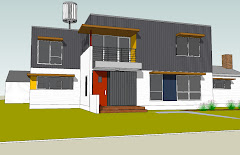
Our total rooftop area is 1,724 square feet and will generate approx. 1,077 gallons of stormwater during a 1" rainfall. Left to its own devices, much of that would find its way elsewhere, and eventually to the river. But the data we collected between July and November of last year suggest that our rain barrels collected some 48% (16% used of for irrigation, 32% diverted to raingardens) or a little over 5,400 gals of water. Our green roof absorbed some 12% (1,200 gals) of the total rainfall at the rooftop for that same period even though it was only in place since October. So, during the 5 months we were able to measure, we diverted 60% of the rainfall at our rooftop from moving across our lawn and into the storm sewer system and river. I expect this number to increase significantly when we have a full year's worth of data and a full year's worth of green roof performance.
That means that if everyone utilized a rainbarrel at one or more of their downspouts we would save enormous amounts of stormwater, sediment, chemicals and fertilizers from entering our lakes and rivers; our recreational waters and our drinking water. That's healthier for everyone. It also means less water being treated by our local governmental water treatment facilities, which saves us money and keeps our waterways beautiful and usable.
Our total rooftop area is 1,724 square feet and will generate approx. 1,077 gallons of stormwater during a 1" rainfall. Left to its own devices, much of that would find its way elsewhere, and eventually to the river. But the data we collected between July and November of last year suggest that our rain barrels collected some 48% (16% used of for irrigation, 32% diverted to raingardens) or a little over 5,400 gals of water. Our green roof absorbed some 12% (1,200 gals) of the total rainfall at the rooftop for that same period even though it was only in place since October. So, during the 5 months we were able to measure, we diverted 60% of the rainfall at our rooftop from moving across our lawn and into the storm sewer system and river. I expect this number to increase significantly when we have a full year's worth of data and a full year's worth of green roof performance.
That means that if everyone utilized a rainbarrel at one or more of their downspouts we would save enormous amounts of stormwater, sediment, chemicals and fertilizers from entering our lakes and rivers; our recreational waters and our drinking water. That's healthier for everyone. It also means less water being treated by our local governmental water treatment facilities, which saves us money and keeps our waterways beautiful and usable.
We'll report more when we know more! Next up, a post on our energy use. There have been a few unexpected twists and turns as we've measured and monitored our consumption.